Our Vision

PUSH's members are the community organizers who make affordable housing a reality in Buffalo. Our members work with partners and funders to create a healthy, just and strong city that includes community control of resources, living wage jobs and access to quality education, healthcare and transportation.


Our Mission

The mission of PUSH Buffalo is to mobilize residents to create strong neighborhoods with quality affordable housing, to expand local hiring opportunities and advance economic justice in Buffalo.

The growth of PUSH over the years has been attributed to its commitment to operating principles, which will shape the implementation of its five years strategic plan.


Our Values

At PUSH Buffalo,
our values are:

Member Involvement - We base our decisions on member participation and consideration of alternatives.

Inclusiveness - Diversity of opinions is our strength and we encourage it.

Ownership - We take advantage of opportunities to create and control community resources.

Results Oriented - Our Plan is an accomplishment. The document outlines goals for measurable outcomes and results.

Relevant - We will respond to changing political and social climate by evaluating trends that are relevant to the goals and objectives we set for our organization.

Justice - We are committed to promoting social justice that gives real power to real people.


Our Strategic Priorities

Over the next five years,
PUSH will strive to:

Build a more democratic, action-oriented organization capable of addressing poor housing condition and the lack of living wage in the neighborhoods

Increase property ownership by low-income residents through the PUSH Community Housing Co-op

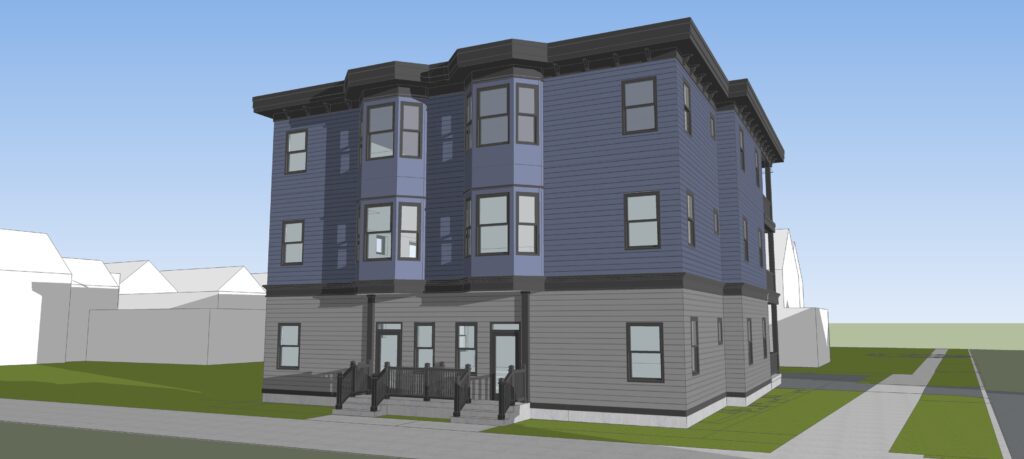
Decrease the rate of housing abandonment by reclaiming empty houses from neglectful public and private owners and redeveloping them for occupancy by low-income residents

Lead direct action campaigns against corporations and government agencies whose practices contribute to the high poverty rate in the neighborhoods

Create a replicable model of grassroots neighborhood organizing and redevelopment, which can be employed in other low-income neighborhoods throughout the Rust Belt

updates
January 19, 2012
The Recovery Runs Through the City
The following piece was published on the Huffington Post website a few days ago highlighting PUSH Buffalo along some other organizations, and the work that we do.

Link to original article

Recent studies showing that about half of Americans are low income and are more likely to be stuck at lower rungs of the class ladder than Canadian and European peers are indicators of a larger, more vexing reality: the American working class is rapidly losing ground on nearly every front and there is no significant dialogue in national political circles about how to counter the trends.

The litany of ills is familiar to progressives: wages stagnant since 1973; unemployment and chronic underemployment hovering intractably above 15 percent; the foreclosure crisis still intensifying with a recent spike in default filings; and a chronically dysfunctional health care system with the ranks of uninsured now swelling past 50 million.

Right-wing economic policy and a broken political system underlie the crisis and have stunted efforts to confront it. Beginning in the mid-1960s, corporations -- cheered on by most economists and policymakers -- reduced industrial capital investment in the United States steadily. As a result, employment in the manufacturing sector, which had long been the ticket to stability and consumer class status for working Americans, has fallen by about 7 million jobs from its peak in the mid-1970s.

With the folly of relying on growth in the finance sector to compensate for losses in manufacturing now brought into focus by the financial crisis, the building blocks for economic recovery and job growth are more elusive than ever.

A toxic politics dominated by corporate money and contorted by culture wars has so far foreclosed any meaningful national dialogue about our fallen state. Instead of forward-looking and strategic investments in infrastructure and research designed to foster sustainable growth, both parties have treated us to a variant of a contrived austerity position, which says that by cutting public expenditure to the bone and accepting permanently higher unemployment, happy days will return at some time in the future , no matter the inefficiencies of our sprawling cities, rising poverty rates, ongoing corporate disinvestment and an intra-urban transportation system premised on $1 gas.

In the absence of national direction, leaders at the neighborhood, regional and state levels have put forward innovative and scalable development initiatives with triple-bottom-line impacts, meaning that they benefit people and the planet and generate sustainable economic growth.

New efforts to scale up the building retrofit sector; expand light-rail transportation; update aging urban sewers and water infrastructure; and foster growth in low-income neighborhoods are united in a vision of sustainable urbanism -- with building walkable commnities with, dynamic small business sectors, high-road labor standards and repaired farm-to-city food systems as the symbiotic objectives.

The building retrofit sector -- centered on energy-efficiency improvements such as insulation and furnace replacements in homes and small businesses -- has made great strides in recent years. With the passage of Green Jobs/Green NY, now being launched across New York State, property owners will be able to finance green retrofits on their buildings with no up-front capital. Through an "on-bill" program, loans taken out for qualifying efficiency improvements can be paid back directly on utility bills over a 15-year period. In most cases, the savings accrued in the form of reduced utility costs cover the loan costs. The New York program builds on successes at the municipal level in Portland, OR, and Washington D.C..

By requiring community-based implementation of the program, Green Jobs/Green NY builds in leverage for ensuring that jobs produced by the additional retrofit construction, which are projected to be as many as 28,000 over the next five years, are accessible to the people who need them the most and offer decent wages and working conditions.

With champions like Clinton's Global Initiative, the NYC-based Center for Working Families, the Laborers' International Union and Green For All, the retrofit sector has the backing to scale-up nationally, especially since the household economics underlying the program speak for themselves. Every dollar spent on qualifying green improvements equates with about one dollar saved on utility bills.

According to one university's estimate, extending retrofit access to all American homeowners would generate $1.3 trillion in construction and 1.3 million jobs. Going green would also mean lower utility bills for 130 million homeowners and reduced carbon emissions.

High-road transportation investment is another sector that offers the promise of building sustainable cities while creating decent jobs. In the Denver region, with oversight from the community organization FRESC, the Regional Transportation District has launched an ambitious light- and commuter-rail expansion plan that will connect the urban core with satellite cities in the vicinity. For the $8 billion renovation of Union Station, one piece of a comprehensive plan that includes the construction of 122 miles of rail, FRESC won commitments to a living wage for service workers in the completed development, green building standards, commercial space for local businesses and an apprenticeship program low-income workers.

FRESC is a member of the DC-based Partnership for Working Families, which through affiliates like LAANE in Los Angeles, has won commitments to high-road standards on infrastructure projects valued in the tens of billions.

In Pittsburgh, the city's sewer authority has launched a multi-faceted effort to invest in green infrastructure to combat the problem of combined sewer overflow, which contaminates rivers, lakes and streams near older industrial cities throughout the northeast and midwest. With a capital budget of about $40 million annually, the Pittsburgh Water and Sewer Authority has begun to repair and replace ageing sewer lines while the city and community organizations have collaborated on an array of greening initiatives aimed at diverting rainwater from the sewer system, including the restoration of key watersheds like the Panther Hollow Watershed. The Nine Mile Run Watershed Association, which oversees this work, had installed more than 1,300 rain barrels since 2004 throughout the district. The efforts also include the scaling up of rain gardens on formerly vacant lots and reforestation of vacant land, both designed to absorb excess run-off.

The Pittsburgh Pipeline, a nonprofit organization, has teamed with institutional leaders to create a pathway to employment on the range of water improvement projects happening in the region.

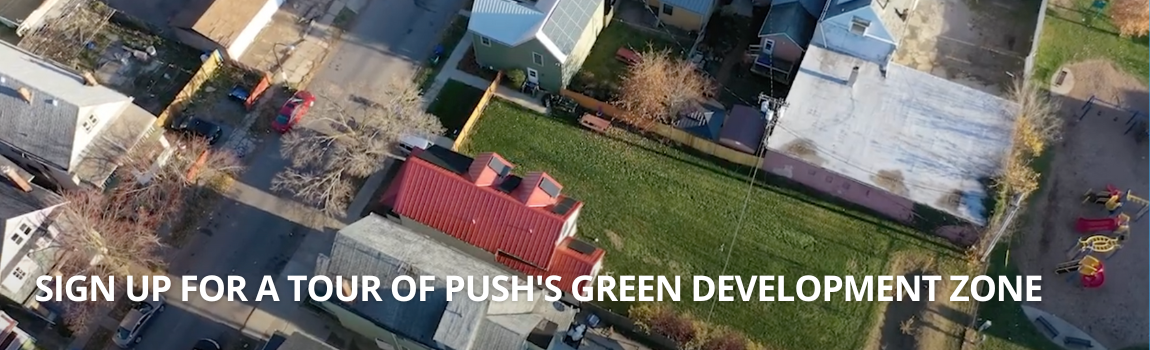
At the neighborhood level, Green Zones have emerged in the low-income neighborhoods of cities such as Kansas City, Springfield, MA and Buffalo. The Zones integrate focused affordable housing development, weatherization, urban agriculture, vacant lot sustainability projects, community organizing and green job training to build momentum for community-controlled revitalization. The Zones have become national models of sustainability by becoming laboratories of green experimentation and generating economic activity at the grassroots, while preserving affordability and defending against forms of predatory speculation. By building power at the grassroots, groups like Alliance to Develop Power and PUSH, which I direct, have demonstrated that people know what they need where they live and have the capacity for self-determination, given some access to resources.

The imaginative solutions to systemic ills bubbling up at the regional, municipal and community-levels could jumpstart a national movement to build a new economy, one in which capital formation and developmental control are rooted in communities over the long term. This movement could build on the growing recognition -- thanks to the Occupy movement -- of the unstable and unjust inequities impacting American society and unite youth, the unemployed, and the working class around a real and achievable vision of sustainable and equitable growth in our urban areas.
read more
updates
January 16, 2012
Was It Real or Just A Dream?
So we will be celebrating the life of Dr. Martin Luther King Jr. today. I think many of you already know about this prominent American figure, but for those of you who don't this quote from the Nobel Prize website says it all: "In 1957 he was elected president of the Southern Christian Leadership Conference, an organization formed to provide new leadership for the now burgeoning civil rights movement....In the eleven-year period between 1957 and 1968, King traveled over six million miles and spoke over twenty-five hundred times, appearing wherever there was injustice, protest, and action; and meanwhile he wrote five books as well as numerous articles. In these years, he led a massive protest in Birmingham, Alabama, that caught the attention of the entire world...he planned the drives in Alabama for the registration of Negroes as voters; he directed the peaceful march on Washington, D.C., of 250,000 people to whom he delivered his address, "l Have a Dream", he conferred with President John F. Kennedy and campaigned for President Lyndon B. Johnson; he was arrested upwards of twenty times and assaulted at least four times." He was assassinated while inside a Memphis TN hotel in 1968.

The designation of the third Monday in January as a national observance for him (even though the drive for a national King holiday began in the 1970's) was made federal law in 1983. So how is the world different in 2012 than in 1960? Well looking at life in the United States one couldn't imagine going into a business, or public place and seeing 3 bathrooms; one for men, women, and coloreds. Could you imagine driving into a town looking for a hotel room to sleep in for the night and the colored hotels are full, even though the regular ones have numerous vacancies? Could you imagine taking one of your business clients to lunch at an establishment and you can't get in because no Negroes are allowed? To the younger folks out there King helped to make it cool to say "You know what? This is bull#@*$, I just can't accept what something is because someone else says so. This thing ain't right, its hurting me and my family physically, and emotionally. It's time to do what we gotta do to change it." This generation knows nothing of what that type of life is like because someone (or some ones) got off their butts, made moves, organized, and came up with (working within the real life confines of that time) a logical plan to create change.

In King's case and in many others, the organizers behind the movement had passion by default to battle whatever is was they did battle with. Passion by default, because it was do or die time, sudden death, win or go home, a life or death situation. The wrong or harmful act practiced against them affected their literal lives. The deck was stacked against them by people in power and they simply had no other choice but to push back. Passion by default, this is the real essence of organizing or social justice, that thing that often times goes silently unnoticed in the midst of all the hype. Why is she so gung ho about LGBT rights? Why is he all up in arms for better public schools? Why are they so concerned about animal rights? Why do they give a damn about weatherization? Why is what goes on in Burma their business? What does it matter to them that a person needs a living wage job? It's that passion by default, 9 times out of 10, the person(s) leading the way are in a sudden death type of situation, they have a personal connection with the issue.

So in 2012 we have King's example and many others to choose from, as models of how citizens have changed the legal and social rules to make everyday life better for themselves. This is no do gooder philosophy, his tactics and techniques have a proven historical track record of generating results. Many have incorporated King's ways (although he borrowed from others) of dealing with societal problems into their strategies. So where we go from here depends on us. The world as it is now is by no means a utopia. Racism (of many types), discrimination (on many levels), hunger, despair, environmental destruction, imperfections exist of which there are numerous types. The battles are many, one can take their pick. We have to first recognize the passion for change inside us individually (what we do, why we do it, and is it right?). After that, it'll be easier to recognize this same passion aback of everyone else. If we can do that and not destroy ourselves as a civilization in the process of change making, then children generations from now will know a better world.
read more
updates
January 11, 2012
Over Half of Germany's Renewable Energy Owned By Citizens & Farmers, Not Utility Companies
by Matthew McDermott

Germany's promotion of renewable energy rightly gets singled out for its effectiveness, most often by me as an example of how to do things well versus the fits and starts method of promotion common in the US. Over at Wind-Works, Paul Gipe points out another interesting facet of the German renewable energy saga: 51% of all renewable energy in Germany is owned by individual citizens or farms, totaling $100 billion worth of private investment in clean energy.

Breaking that down into solar power and wind power, 50% of Germany's solar PV is owned by individuals and farms, while 54% of its wind power is held by the same groups.

In total there's roughly 17 GW of solar PV installed in Germany—versus roughly 3.6 GW in the US (based on SEIA's figures for new installations though the third quarter of 2011 plus the 2.6 GW installed going into the year).

Remember, Germany now produces slightly over 20% of all its electricity from renewable sources.

The thing that got me though, other than the huge lead in solar PV installations Germany has over the US, thanks to good policy, and the fact that so much wind power isn't owned by utilities, is what slightly over half of renewable energy being owned not by corporations but by actual biological people means—obviously a democratic shift in control of resources and a break from the way electricity and energy has been produced over the past century.

A good thing: Decentralized power generation, more relocalization and reregionalization of economic activity, the world getting smaller while more connected and therefore in a way bigger at the same time... taking a step backwards, and perhaps sideways, while moving forwards.

link to original piece here
read more
updates
January 10, 2012
A MOMENT OF SILENCE FOR KEASHA DRAFT
Keasha Draft was the wife of former Buffalo Bills outside line backer Chris Draft (2009, 2010). She died of cancer at the end of December 2011. This came one month after she married the man who she was dearly in love with. The two tied the knot in the Atlanta, GA area. Many may be wondering why this website may be speaking on this situation. I'll tell you why. In a time that some might say is the age of the pampered athlete Chris was a link between organizing and professional sports, the Cuban link between community and the fast paced world of the National Football League. Through his Chris Draft Family Foundation, PUSH Buffalo was able to see first hand that the man genuinely cared more than just about himself. Members of our organization worked with him during his time in Buffalo, as his foundation assisted many worthwhile community causes/organizations including the Buffalo Public Schools. This writer personally witnessed this aspect of the man's personality. When news of this happening was first messaged to us many who knew or met him were quite saddened and shocked.

Chris our hearts and minds go out to you and your family during this difficult time.
read more
updates
January 9, 2012
Sustainability Not Just Another Sexy Catchphrase
Sustainability is a word that (similar to green, going green etc.) has been thrown around a lot lately by many different types of groups and organizations. So what does it really mean? Lets take a look. In order to truly understand what the word really means (in the context of how it has been used) we have to check its academic background. So for practical purposes we'll use the popular online Merriam-Webster dictionary as a source for our search for the true meaning of what we are talking about. Sustainability (a noun) is rooted in the word sustainable (an adjective), which is rooted even deeper in the word sustain (which can be used as either a noun or a verb). Whew! a tongue twister, but follow me for a second. To sustain (according to Merriam-Webster) is "to give support or relief to".

Ok, in the context of what we're taliking about (sustainability being a lifestyle) let's look at two definitions from Merriam-Webster, and then we'll cross check these definitions with another academic source to create a bigger picture. According to Merriam-Webster sustainable means: a: of, relating to, or being a method of harvesting or using a resource so that the resource is not depleted or permanently damaged. (Examples= sustainable techniques, sustainable agriculture) b: of or relating to a lifestyle involving the use of sustainable methods. (Examples= sustainable society). The United States Environmental Protection Agency has this to say about sustainability as a lifestyle; "Sustainability is based on a simple principle: Everything that we need for our survival and well-being depends, either directly or indirectly, on our natural environment. Sustainability creates and maintains the conditions under which humans and nature can exist in productive harmony, that permit fulfilling the social, economic and other requirements of present and future generations. Sustainability is important to making sure that we have and will continue to have, the water, materials, and resources to protect human health and our environment".

People, water, air, earth, land, sea, housing, animals, the sun, energy (especially the heat that goes out the window of an unweatherized home), everything that is around you everyday that you might take for granted, is a resource. We all (whether we'd like to admit it or not) are interdependent on each other. Nowhere is this fact more apparent than amongst the lower rung peoples of a capitalist society. It is quite imperative that the people at the bottom (one could say the 99%) or those with the least financial resources make the best use of mother Earth's natural resources "to give support or relief" to each other in order to survive. Surviving not just for the now but for the futures of our children. That's why the concept of a net zero house is important, that's why wide spread (low income) access to weatherization in cold weather cities/areas is important, that's why making sure the people in a neighborhood can make a decent living wage (not working at McDonalds) is important, that's why making the most efficient use of our God given earthly resources is important. So here we are, sustainability the concept is not very complicated at all. Let us be good stewards of what we've been blessed with. Let us use what is around us everyday to the best of our abilities, to give support and relief to each other.
read more
updates
December 28, 2011
12 Resolutions for the New Year
2012 will be here in a few days. As a new year rolls in it is customary in many cultures to make personal goals or resolutions for the forthcoming year. Now these resolutions are usually made with the goal of bringing in the new beginning (new year) with a better start. The hope in this belief is that bringing in a newer year with a broader, less selfish mindset will bring blessings to he or she who initiates the resolution. PUSH Buffalo being who we are and what we do, have put together this set of New Year's resolutions for 2012. This list is probably not big enough but here it goes. Hopefully we can be an inspiration to many of you out there as you have been to us this past year.


12. Advocate for more cross generational/cultural line dancing (seriously though, any activities that bring different types of neighbors together for fun, healthy community building should be encouraged)


11. Be a leader in the struggle to help make Buffalo (and the world) a better place to live (ex: encouraging more dialogue between various community stake holders)


10. Hold big banks and the wealthiest 1% accountable


9. Identify assessable and affordable health care options for community residents


8. Help to identify healthy fresh food options for neighborhood residents


7. Bring new and creative ideas to the table (Not be a part of the problem but a part of the solution to the ills that have plagued the Buffalo region for decades)


6. Continue to identify good affordable housing options for low income residents


5. Fight for National Fuel Gas to spend more of their own money and not public money for weatherization reform


4. Help bridge the gap between organizing & housing development


3. Lead by example showing the benefits of a sustainable community


2. Show that access to living wage jobs (ex: Green jobs), jobs that pay enough to support a family, not only make sense but deserve widespread community and national support


1. Be a beacon of hope for what could be a better Buffalo & Western New York


read more
updates
December 26, 2011
Holiday Party Recap
What does a diverse a community look like? One answer to this question could be "a community that has representatives of the various countries and cultures of earth dwelling within it". Another answer to this question could depend on the point of view of the answerer. Still another answer might be a community based on a diversity of age (youngest to oldest), a diversity of occupation (teachers to store clerks), a diversity of religious beliefs, or a diversity of pleasant personalities. Well at the PUSH Buffalo annual holiday party this year, diversity in it's many forms made an unprecedented appearance this year. Held this past Thursday December 22nd at the Grant St Neighborhood Center (GSNC), this year's annual holiday party was the biggest one to date.

Every year since this holiday party is was first held and every year afterwards, organizers have worked hard to make the party's appeal as broad as possible. The west side neighborhood of Buffalo where the event takes place is a beacon of diversity for the county of Erie. Since everyone does not celebrate the holiday season the same way, careful attention is paid to detail. There were hundreds of people at the holiday party this year. Among the faces that could be seen at the event were the old, the young, the store clerk, the cleaning woman, the teacher, the civil service worker, the business owner, the Muslim, the Christian, the Buddhist, the Jew, the Egyptian (and other African peoples of varying nationalities), the Iraqi, the Burmese, the Vietnamese, the Puerto Rican, and the Native/Caucasian/ and African American. There was a toy drive, and free chicken give away this year. The food presented was a sampling of dishes from just about everywhere. LaNova's pizzeria donated some sheets of Buffalo's best pizza to the party. Guests to the party participated in karaoke and a mini dance party (which was probably the best part of the evening. I have never seen such a large cross cultural line dancing to the "Cupid Shuffle" in my life, a great sight to see!) was held after dinner in their honor.

A special hand of gratitude goes out to the F.A.T.H.E.R.S. group for organizing the toy drive this year (toys were presented at the party) in which the response was great, and also to LaNova's pizzeria. What does a diverse community look like? I think from a world watcher's point of view it looks a lil something like this; the neighbors of a community regardless of age, race, or creed getting together in a civilized manner to eat, drink, sing karaoke, and line dance.
read more
Site by: OFFICELAB